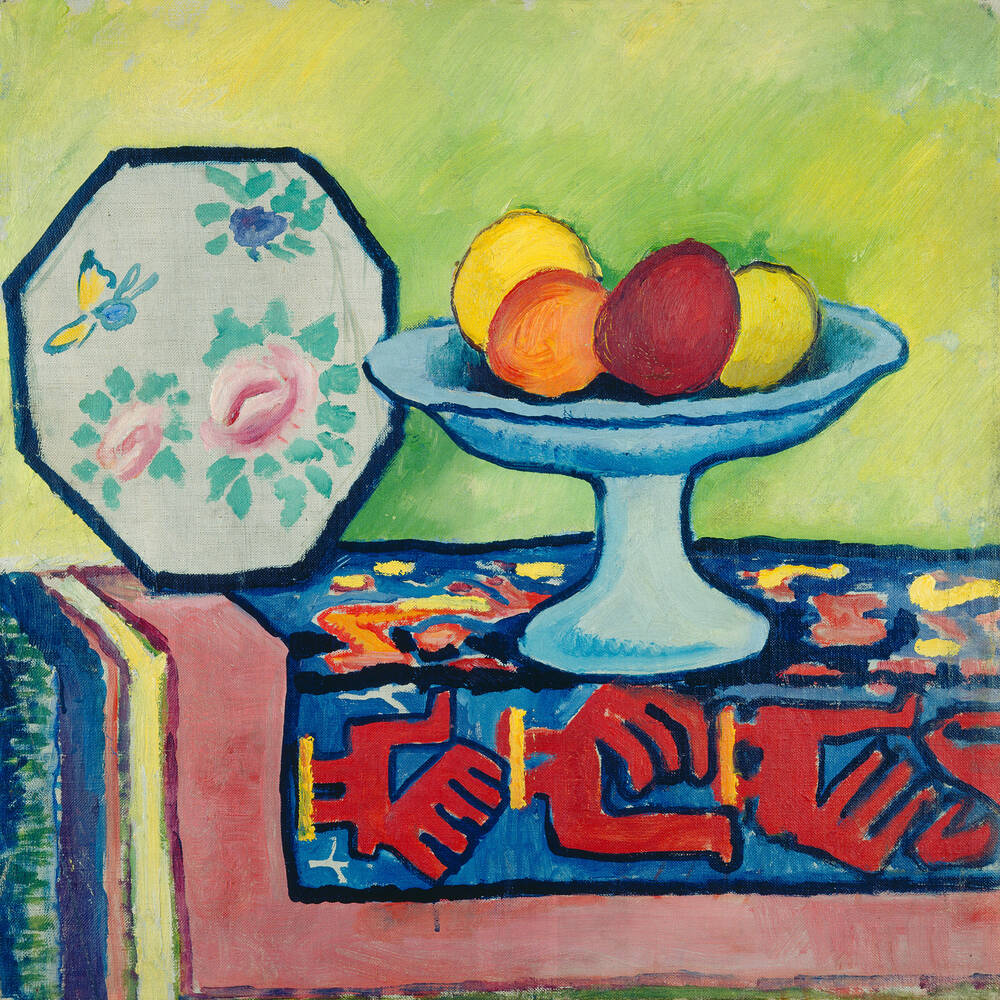
Beautiful and austere, playful and orderly, pop and political: ornaments shape our perception in many areas of life – including art. The exhibition invites visitors to an exciting journey of discovery into the world of patterns and repeats. At the same time, it analyses their function and significance: from classical modernism to the present day.
It all began with the designs of the Wiener Werkstätte and the early 20th-century debate about the role of ornamentation in modernism. Despite all the criticism of supposedly superfluous decoration, the interior paintings of Henri Matisse, Édouard Vuillard and Hans Purrmann convey a positive attitude to life through their lavishly colourful and freely designed wallpapers, fabrics and carpets. August Macke enriched his own repertoire of forms with exotic ornamentation, allowing colour, form and surface to become the actual subject of the picture. Abstract pictorial concepts also emerged from the exploration of ornamentation. From here, the exhibition draws parallels with contemporary painting and installation art.
The selection of works – which includes numerous paintings and prints as well as textile works and installations – shows the formal rigour inherent in ornamentation on the one hand. On the other hand, it emphasises the playful aspect. Sigmar Polke, Thomas Bayrle, Philip Taaffe and Katja Davar share an apparently timeless interest in this theme.
Historically developed ornaments contrast with individually designed image patterns that correspond to today’s sense of colour and form. Socially critical messages can also be conveyed through patterns and ornaments: for example, in the work of artists such as Nevin Aladag, Azra Akšamija and Susan Hefuna, who draw on the traditions of their respective cultural circles.

Additional Navigation Points
Search Tours
Use the convenient filters to narrow down tours and find the perfect guide for you.
TitleText
Night mode
Reset Settings
Are you sure to reset the Multimedia Guide system to factory settings?
That's how it works!
Erfolge
Nachtmodus
Es werde Nacht
Guide
Tour durchgehört
Home sweet home
Logo 3x klicken
Merkzettel
Nutze den Merkzettel
QR
Nutze den QR-Code-Scanner
Hacker
Objekt 1337 nicht gefunden
Clear bookmarks?
Are you sure to clear the list and remove all objects?
Switch tour
The chosen object is part of another tour. By proceeding you leave your current tour.
Masked Contents
If you choose one of the first two options, terms from historical work titles and handed-down descriptions that are racist or otherwise discriminatory will be displayed. The SKD dissociate themselves from this use of language and stand for a critical examination of it.