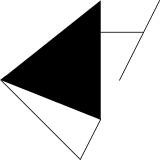

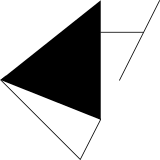
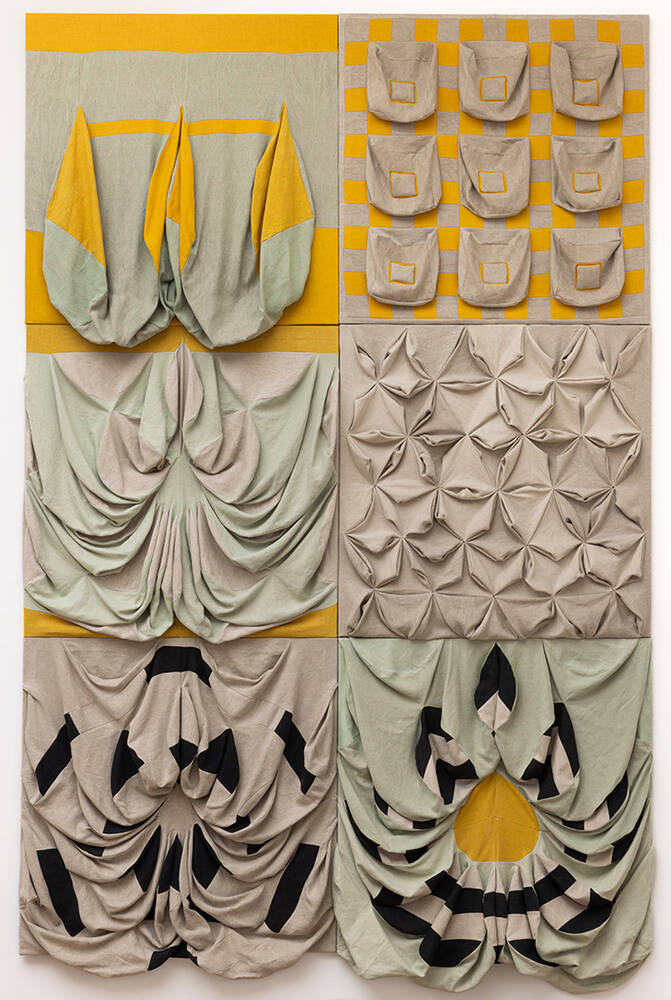
In the 1970s, working with textiles was already regarded as a feminist statement. Silke Radenhausen has now turned her attention to the textile material on which, during her student days, paintings were created in a minimalist, monochrome style and on a large scale: the painter’s canvas. In her works, it is not merely a medium for images, nor a neutral surface; rather, it takes on a life of its own, turns itself inside out, hangs down and forms random folds that can be draped. Stretching it onto a stretcher frame makes it clear that the objects are still intended to be viewed within the context of the art form ‘painting’
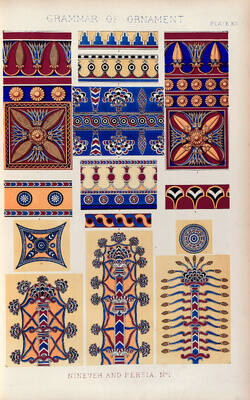
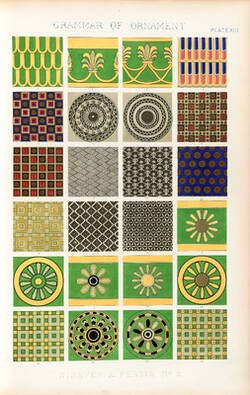
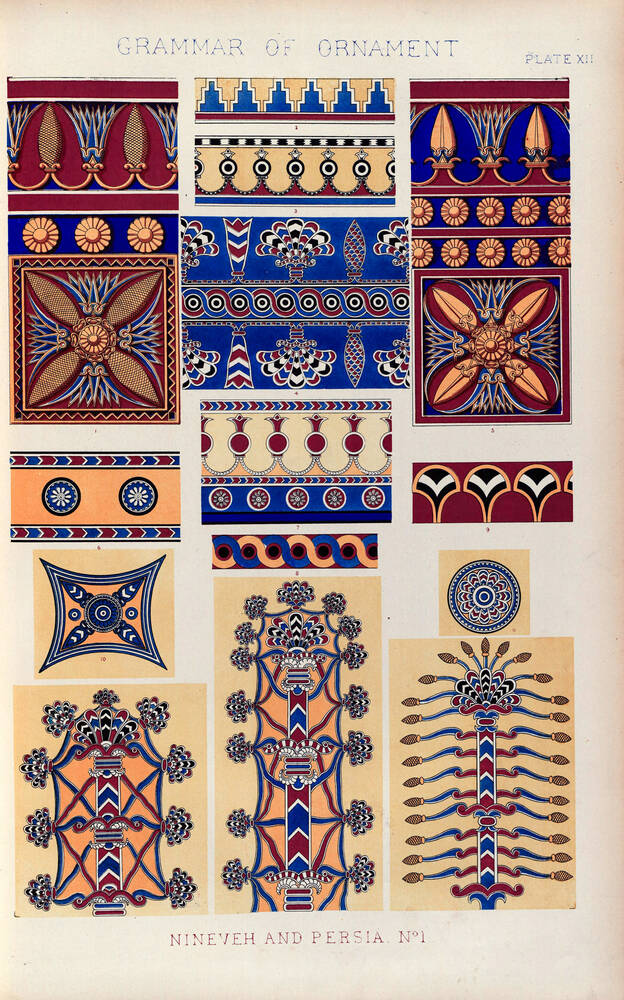
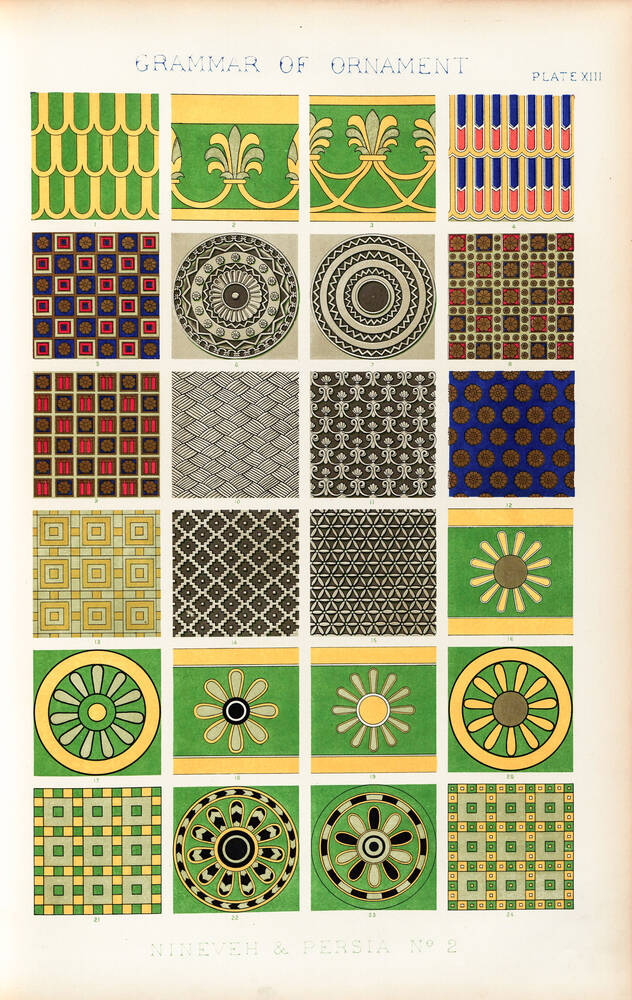
Radenhausen cuts, dyes (she does not paint!) and, instead of drawing, sews shapes together. In doing so, she simultaneously paraphrases the smooth surface of an image – in this case, a plate entitled ‘Nineveh and Persia’ from Owen Jones’ famous pattern book ‘Grammar of Ornament’, published in 1856. In that book, the ornaments of decorative art objects from various regions of the world and different eras are detached from their material and conceptual origins and depicted in the form of purely aesthetic, abstract two-dimensional art.
Further Media
- Location & Dating
- 1997
- Material & Technique
- Leinwand, maschinengewaschen, ungefärbt, maschinengefärbt
- Dimensions
- 400 × 300 cm
- Museum
- Mercedes-Benz Art Collection
- Inventory number
- X26.219