
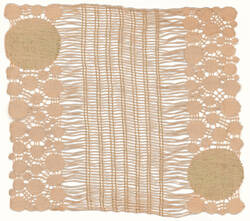
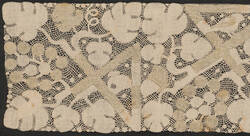
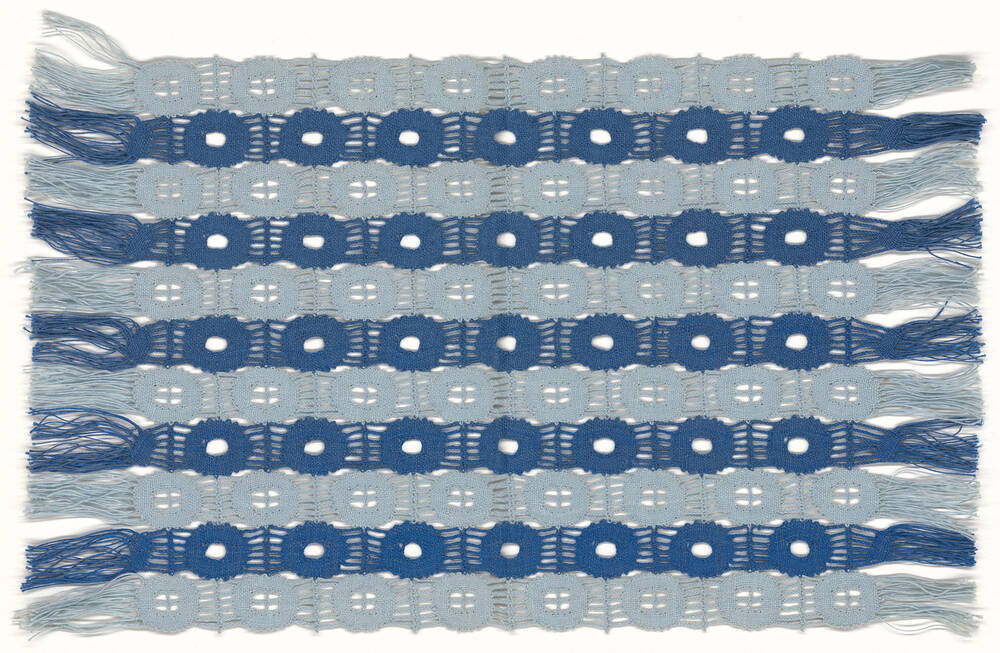
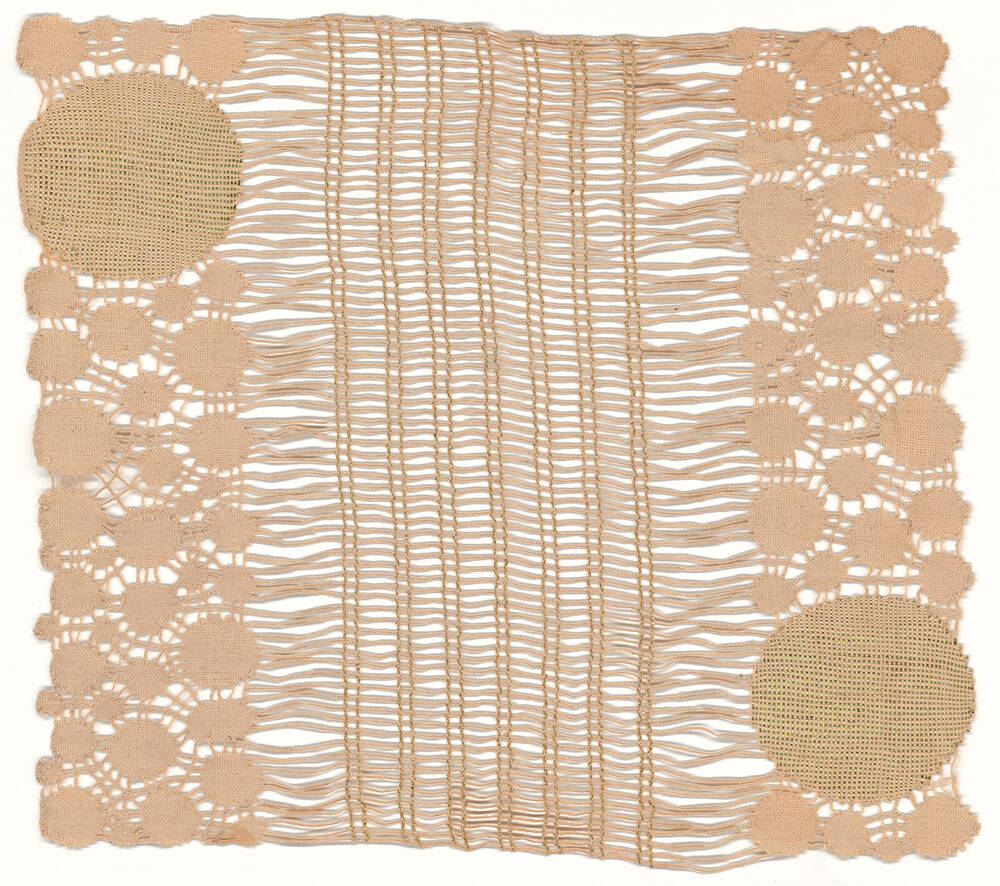
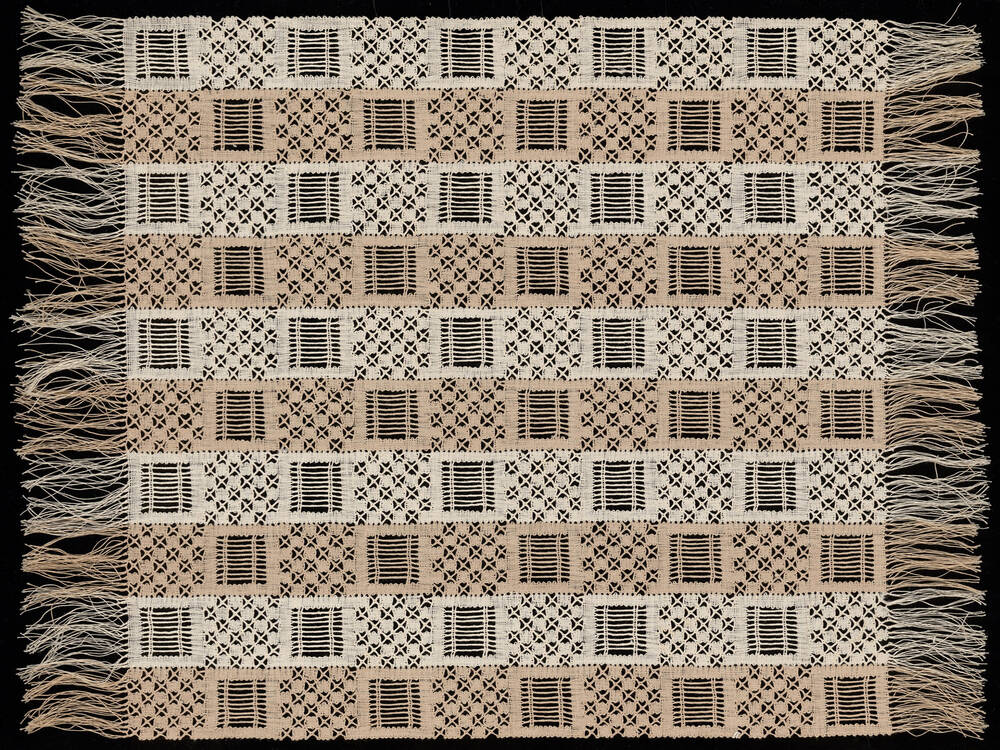
Suse Bernuth, a textile artist from Wuppertal, sought to free the art of lace-making from the playful cuteness of past decades. Through clarity, minimalism and a sparing use of materials, she aimed to enhance its impact and increase its value.
A colleague once described her work as follows: ‘She did not like any commotion around her. She herself radiated calm, was deliberate and thoughtful; yet, deep down, she was also restless … You can see it in the works she left behind: calm – stillness – balance – harmony in form and colour. But in the very same piece, in the very same image, there is also restlessness – dynamism – the seed of a new beginning – of something new – of a different language expressed through form and colour.’
Yet her designs were so innovative that even experienced bobbin lace-makers found them difficult to execute. Although Suse Bernuth herself was a trained dressmaker and had studied textiles and fashion in Magdeburg as well as painting in Berlin, she did not master the art of bobbin lace-making herself. When she was subsequently commissioned by the Bavarian Ministry of Culture to take on the artistic direction of the three Upper Palatinate bobbin lace schools, she faced a major challenge: the traditional lace-makers had to be persuaded of her new patterns and the possibility of bringing her designs to life.
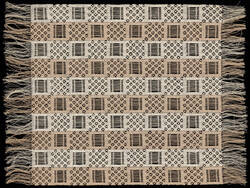
In 1958, Suse Bernuth moved to Wuppertal with her husband Fritz Bernuth, where she turned her attention increasingly to tapestries. This was because in Wuppertal, the cradle of early industrialisation with a focus on textile production, lace had long since been produced by machine. A number of tapestries were conservatorially restored this year, supported by the restoration programme of the State of North Rhine-Westphalia.
Further Media
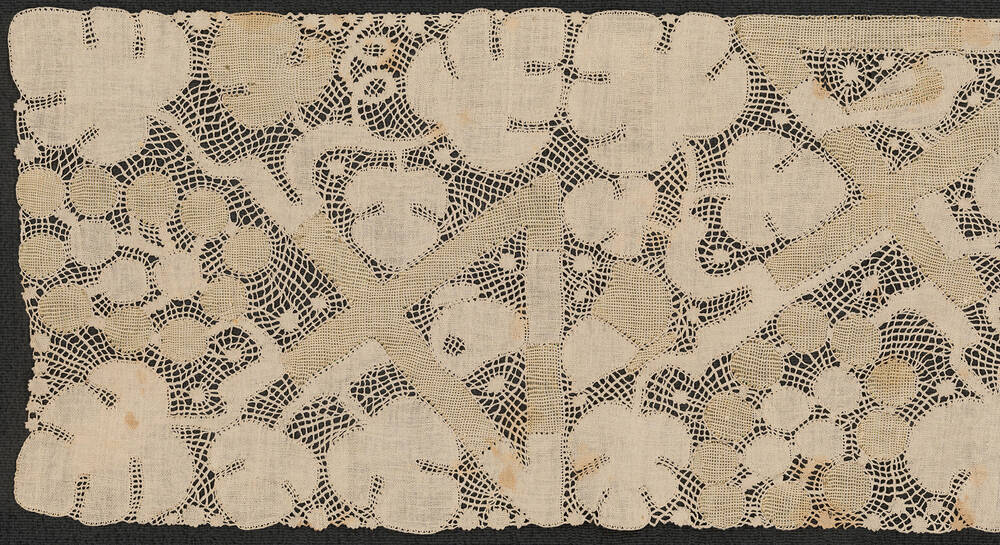
- Location & Dating
- 1950er Jahre
- Material & Technique
- Mittel- und hellblaues Leinengarn
- Dimensions
- 27 × 43 cm
- Museum
- Sammlung Anneliese Wienands
- Inventory number
- X26.218