


Born in Soest in 1891, Wilhelm Morgner knew from a very early age that he wanted to become an artist. His training was brief: in 1908 he visited the artists’ colony in Worpswede, and shortly afterwards spent three months at Georg Tappert’s private painting school in Berlin.
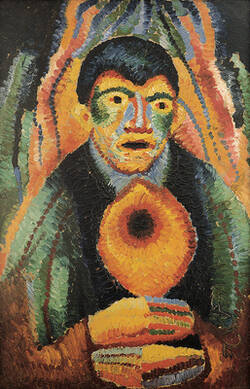
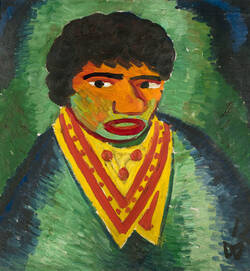
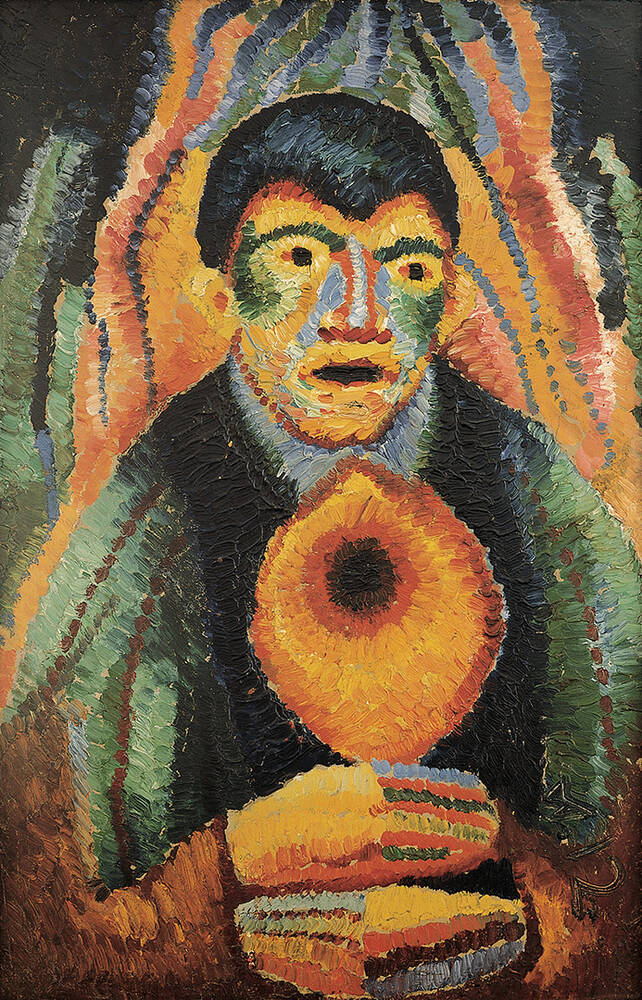
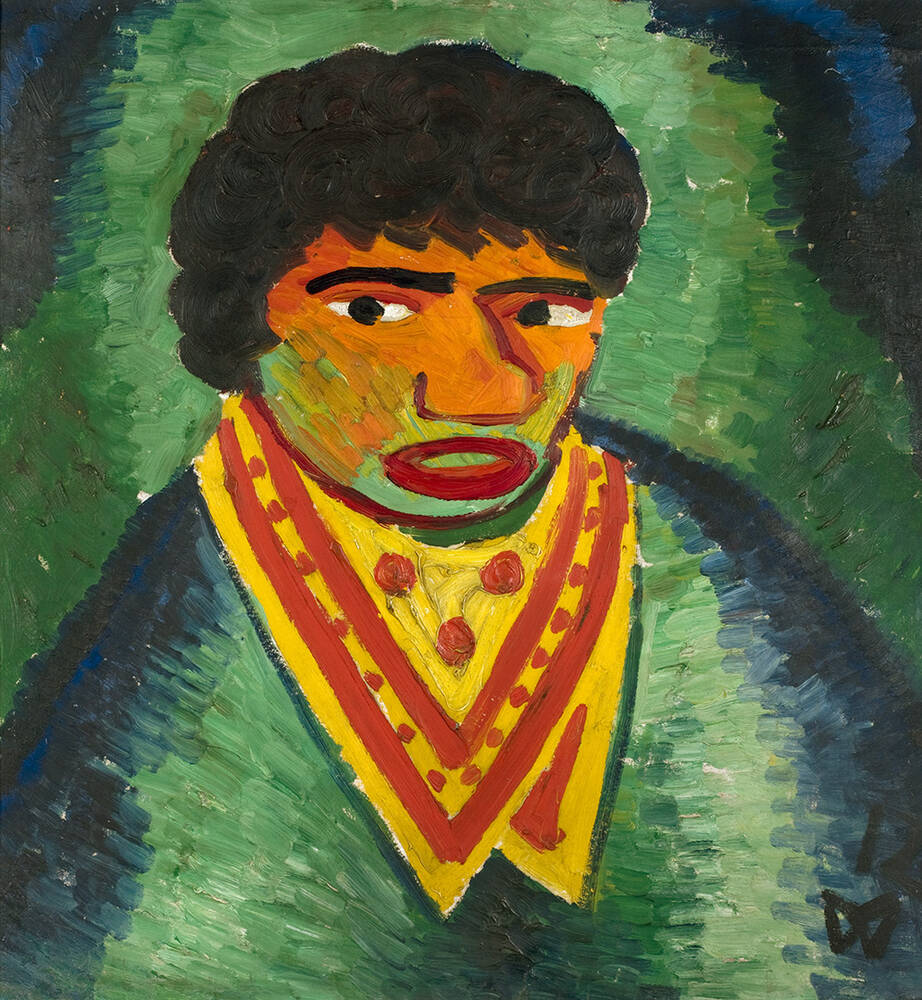
After naturalistic beginnings, he turned to the expressionist style of Vincent van Gogh. His favourite subject was the world of rural labour. As early as 1911, he was painting large-scale oil paintings in which he depicted rural scenes in highly simplified forms: little sense of depth, no shading, only hard contour lines outlining monochrome areas.
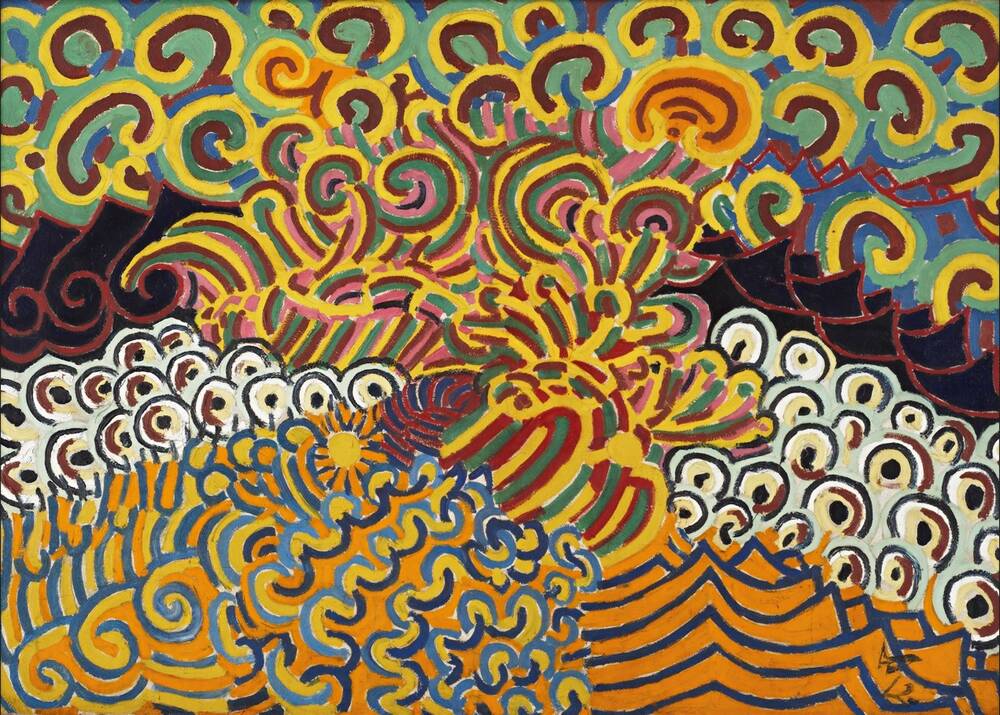
At the same time, Morgner forged close ties with artists from the ‘Brücke’ and the ‘Blauer Reiter’ groups. Franz Marc, for example, was ten years his senior, whilst August Macke was four years older. Stylistically, however, Morgner remained independent. Ornamental, rhythmic brushstrokes characterised his increasingly abstract compositions during this period, which—in line with the philosophy of many artists working in the abstract—sought to reveal the formal processes at work in nature.
In 1912, aged just 21, he painted the two works shown here, on loan from the Wilhelm Morgner Museum in Soest. Two portraits from the same year have been part of the Von der Heydt Museum’s collection since 1958. Two further paintings, ‘Man at the Door’ from 1909 and ‘White-bearded Jew’ from 1912, were confiscated by the National Socialists from the collection of the Barmer Kunstverein as part of the ‘Entartete Kunst’ campaign in 1938.
Wilhelm Morgner was killed in action in West Flanders in 1917. Despite his tragically short life and creative career, his oeuvre comprises around 250 paintings, 2,000 drawings and watercolours, and approximately 70 prints.
Further Media
- Location & Dating
- 1912
- Material & Technique
- Öl auf Pappe
- Dimensions
- 84 × 121 cm
- Museum
- Museum Wilhelm Morgner, Soest
- Inventory number
- X26.214