
Gustav Wiethüchter, born in Bielefeld in 1873, completed his apprenticeship in Berlin, amongst other places, and in 1900 was appointed as a teacher of ornamental and botanical drawing at the School of Arts and Crafts in Barmen. In 1915, he was given the title of professor and taught as an influential and progressive educator until 1933. Due to differences with the school administration, Wiethüchter resigned from his post following the National Socialists’ seizure of power.
Even before the First World War, he had taken part in exhibitions organised by the Deutscher Werkbund; in 1919, he joined the ‘Junges Rheinland’ and the ‘Novembergruppe’, which had been founded in Berlin and was concerned with the social relevance of art. In the 1920s, he emerged as one of the leading figures of Rhenish Expressionism.
He initially drew inspiration from Symbolism and Art Nouveau. However, influences from the Expressionists and Cubism, as well as echoes of Matisse, the Fauves and Hodler, can also be discerned in his work of the 1920s. The artist was primarily interested in rural life and nature. However, Wiethüchter also devoted himself to the applied arts. His often ornamental style, in which he depicts people and nature reduced to their essential elements, is typical of the art of a second generation of Expressionists. Like other painters of his time, he sought a contemporary expression of beauty and harmony, basing this on the timeless artistic principles of colour, form and composition. Almost forgotten, Wiethüchter died in Wuppertal-Barmen in 1946.
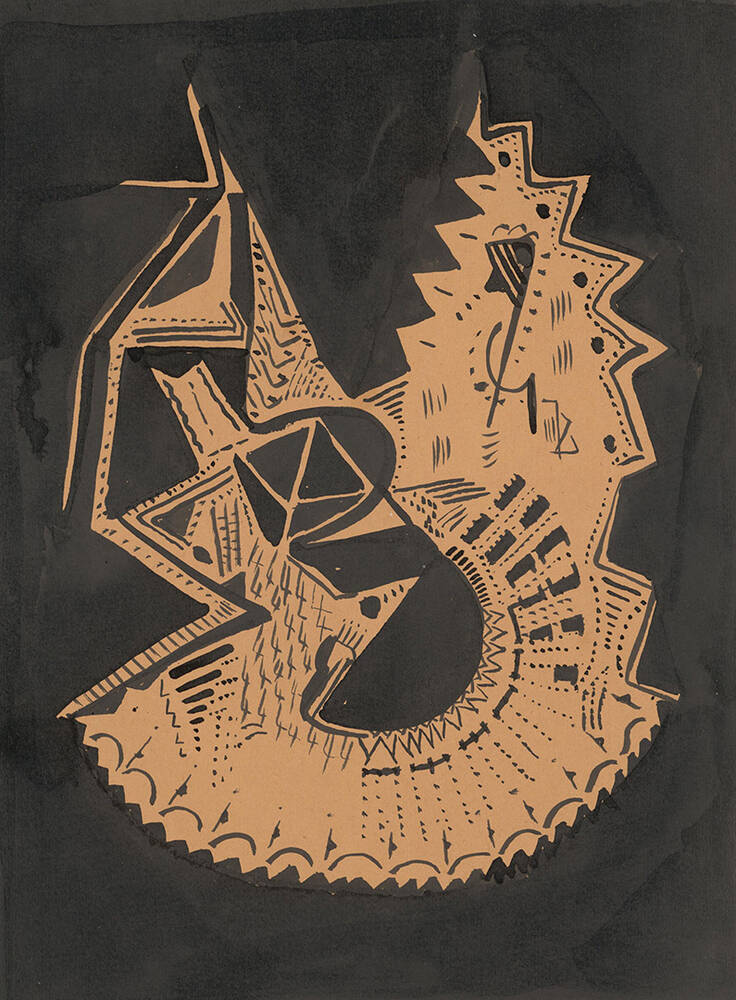
- Material & Technique
- Tusche auf Papier
- Dimensions
- 26,9 x 20,6 cm
- Museum
- Von der Heydt Museum
- Inventory number
- KK 1993/116