Women played a central role in the Wiener Werkstätte (WW), and in some cases even held leading positions. However, many female designers were overlooked for a long time. This was partly due to the misogynistic climate in Vienna around 1900, as evidenced by disparaging remarks from artists such as Adolf Loos and Julius Klinger: Loos spoke of ‘bored daughters of the upper classes’, Klinger of the ‘Viennese women’s arts and crafts’, and the architect Oswald Haerdtl called the Werkstätte an ‘outrageous doll’s shop’.
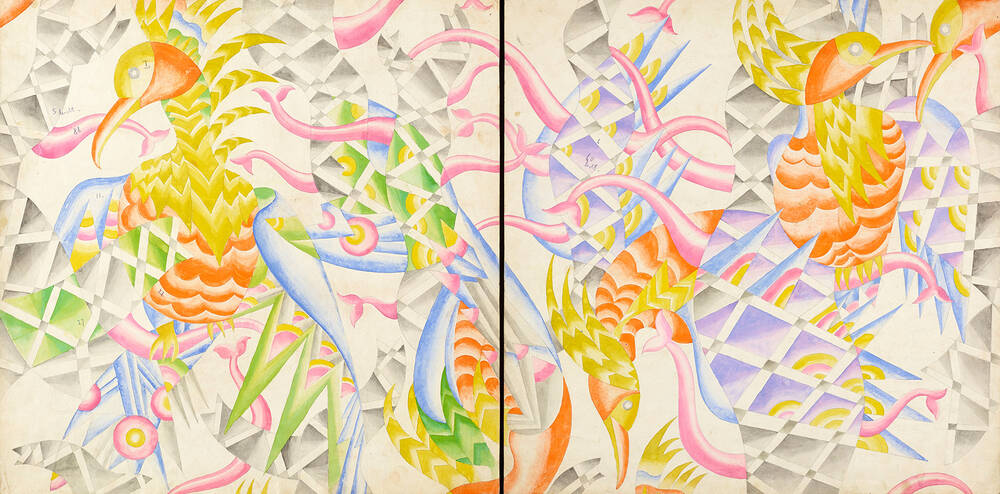
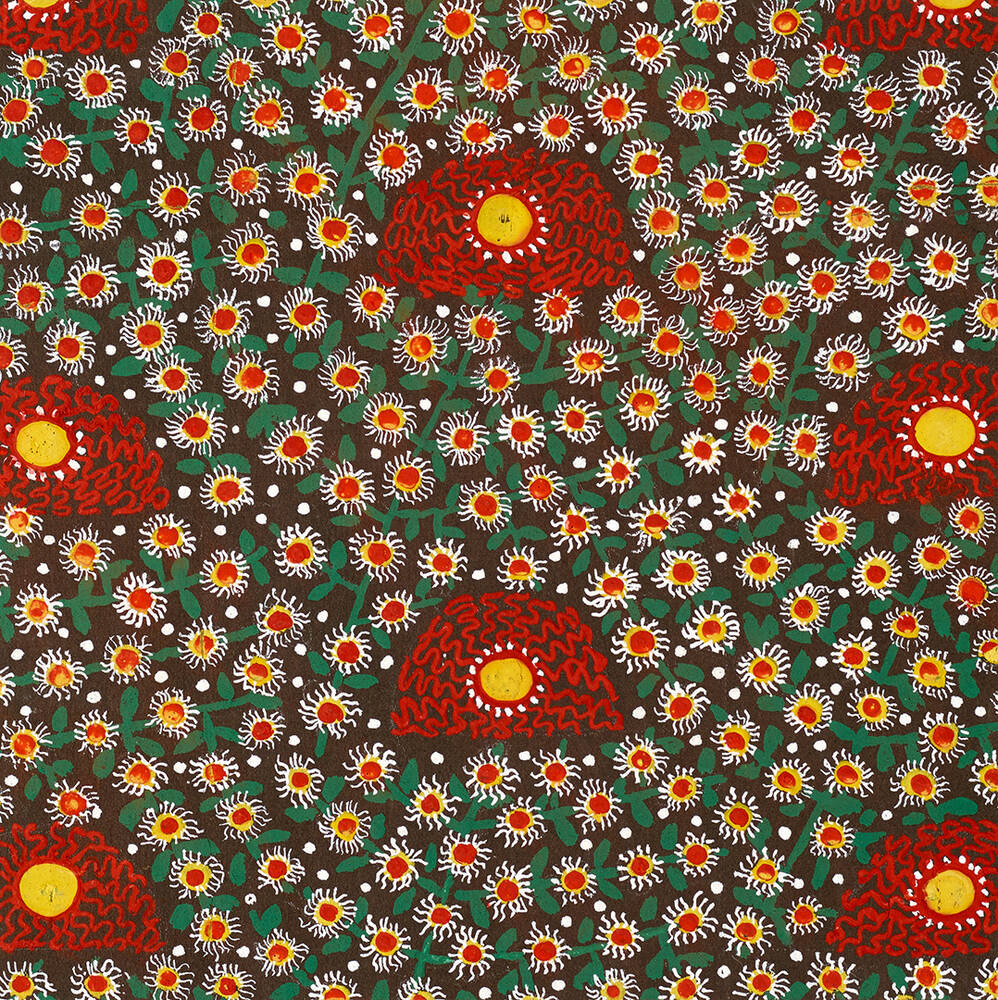
This room of the exhibition features works by Hermine Weiß, Lotte Frömel-Fochler and My (Marianne) Ullmann. They represent the diversity of the female artists who were involved in the Viennese arts and crafts movement and whose names are scarcely known today.
For a long time, art history drew a distinction between fine art – which included painting, sculpture and architecture – and applied art, which was regarded as ‘merely’ decorative and therefore of secondary importance. It was precisely this area of the so-called arts and crafts that was predominantly assigned to women: textiles, ceramics, fashion, book arts and graphic design were regarded as ‘feminine’ pursuits, associated with skill, good taste and domesticity. The hierarchy of genres was thus also a hierarchy of gender. Those working in the arts and crafts sector were often not regarded as ‘artists’ but as ‘craftswomen’, with consequences for their recognition, pay and public reception.
This allocation was institutionally entrenched. The Academy of Fine Arts in Vienna did not admit women until 1920, whilst the School of Arts and Crafts had been open to them earlier. Access to the arts and crafts was thus not only an expression of a prescribed role, but often the only route to an artistic education.

Additional Navigation Points
Search Tours
Use the convenient filters to narrow down tours and find the perfect guide for you.
TitleText
Night mode
Reset Settings
Are you sure to reset the Multimedia Guide system to factory settings?
That's how it works!
Erfolge
Nachtmodus
Es werde Nacht
Guide
Tour durchgehört
Home sweet home
Logo 3x klicken
Merkzettel
Nutze den Merkzettel
QR
Nutze den QR-Code-Scanner
Hacker
Objekt 1337 nicht gefunden
Clear bookmarks?
Are you sure to clear the list and remove all objects?
Switch tour
The chosen object is part of another tour. By proceeding you leave your current tour.
Masked Contents
If you choose one of the first two options, terms from historical work titles and handed-down descriptions that are racist or otherwise discriminatory will be displayed. The SKD dissociate themselves from this use of language and stand for a critical examination of it.